Mastering Your TSC Online Payslip in 2026: A Kenyan Teacher’s Essential Guide
For every dedicated teacher under the Teachers Service Commission (TSC) in Kenya, understanding and accessing your payslip efficiently is crucial for financial planning and peace of mind. As we navigate 2026, the TSC online payslip system, known as T-Pay, remains your primary digital gateway to essential salary information.
This comprehensive guide, crafted by a seasoned Kenyan financial expert and SERP intelligence analyst, will walk you through everything you need to know to confidently manage your TSC payslip online. We aim to equip you with the knowledge to not only access your payslip but also to decipher its contents, leverage it for financial decisions, and avoid common pitfalls.
What is the TSC Online Payslip and T-Pay System?
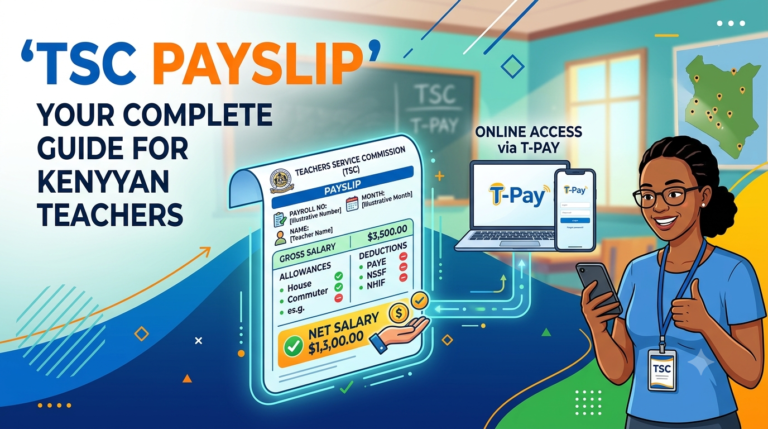
The TSC online payslip refers to the digital statement of earnings and deductions provided by the Teachers Service Commission to its employees. It is primarily accessed through the official TSC T-Pay portal, a secure online platform designed to offer teachers convenient and real-time access to their monthly salary details, P9 forms, and other vital financial documents.
The T-Pay system revolutionized how Kenyan teachers manage their pay information, replacing manual processes with an efficient, accessible digital solution. It ensures transparency and empowers teachers with immediate access to their financial records.
Expert Tip: Always use the official TSC website or direct T-Pay portal link to avoid phishing scams and ensure your data remains secure.
Why Every Kenyan Teacher Needs Their TSC Online Payslip
Accessing your TSC online payslip is more than just a formality; it’s a fundamental aspect of sound personal finance and administrative necessity for all teachers in Kenya. In 2026, its importance spans several critical areas:
- Financial Planning: Regularly reviewing your payslip helps you track income, understand deductions, and budget effectively.
- Loan and Mortgage Applications: Financial institutions frequently require recent payslips as proof of income when processing loan, mortgage, or other credit applications.
- Record Keeping: Digital payslips serve as official documentation for tax purposes (P9 forms), employment verification, and personal financial archives.
- Deduction Verification: It allows teachers to scrutinize statutory and voluntary deductions, ensuring accuracy and identifying any discrepancies promptly.
- Performance Insights: While not direct performance metrics, understanding allowances and salary structure can offer insights into remuneration packages and career progression.
Types of Information on Your TSC Payslip
Your TSC payslip is a detailed document that breaks down your total earnings and all deductions. Key sections typically include:
- Employee Details: Your TSC Number, ID Number, Name, Designation, Station, and Bank Account details.
- Gross Pay: Your basic salary before any deductions, often including various allowances.
- Allowances: Specific payments like house allowance, commuter allowance, hardship allowance (if applicable), and responsibility allowance.
- Statutory Deductions: Mandatory contributions such as PAYE (Pay As You Earn) income tax, NHIF (National Hospital Insurance Fund), and NSSF (National Social Security Fund).
- Voluntary Deductions: Contributions to SACCOs, union dues, bank loans, Mwalimu Sacco shares, and other approved welfare schemes.
- Net Pay: Your take-home salary after all deductions have been made.
How to Access Your TSC Online Payslip (T-Pay Login 2026)
Gaining access to your digital payslip through the TSC T-Pay portal is a straightforward process, whether you are a new teacher or need to reset your password. Follow these steps for seamless access in 2026:
1. TSC T-Pay Registration (For First-Time Users)
If you have never accessed your payslip online, you’ll need to register for the T-Pay service:
- Visit the official TSC T-Pay portal.
- Click on the “Register” or “New User Registration” option.
- Enter your TSC Number, ID Number, and other required personal details accurately.
- Create a strong, unique password.
- Provide a valid mobile number and email address for verification and future communication.
- Confirm your details and submit the registration form.
- You will receive a confirmation message, often via SMS or email, with your login credentials or instructions to activate your account.
Expert Tip: Ensure your mobile number registered with TSC is current. This is vital for password resets and security confirmations.
2. TSC T-Pay Login (Existing Users)
Once registered, logging in is simple:
- Navigate to the TSC T-Pay login page.
- Enter your TSC Number (as your username).
- Input your password carefully.
- Click “Login.”
- You should now be able to view your dashboard and access your payslips.
3. Resetting Your TSC T-Pay Password
Forgotten your password? Don’t worry, the process is user-friendly:
- Go to the TSC T-Pay login page.
- Click on “Forgot Password” or “Reset Password.”
- You will be prompted to enter your TSC Number and sometimes your ID Number.
- A verification code or password reset link will be sent to your registered mobile number or email address.
- Follow the instructions to create a new, strong password.
- Log in with your new credentials.
Warning: Never share your T-Pay login credentials with anyone, even colleagues. Keep your password confidential to prevent unauthorized access to your financial data.
Costs, Requirements, and Timelines for TSC Payslip Access
Accessing your TSC online payslip is a service designed for convenience and is entirely free of charge. There are no hidden fees or subscription costs associated with viewing or downloading your payslips through the official T-Pay portal.
Key Requirements:
- TSC Number: Your unique Teachers Service Commission identification number.
- National ID Number: Your valid Kenyan national identification card number.
- Registered Mobile Number: An active mobile number registered with TSC for verification purposes.
- Internet Access: A stable internet connection to access the online portal.
- Device: A computer, tablet, or smartphone with a web browser.
Timelines:
Once you are registered and have your login credentials, access to your current and past payslips is virtually instant. New payslips are typically uploaded shortly after salaries are processed each month, usually within the first week of the new month.
Step-by-Step Guide: Navigating the T-Pay Portal
After successfully logging into the TSC T-Pay portal, here’s how to navigate and make the most of its features:
- Dashboard Overview: Upon login, you’ll land on your personal dashboard. This usually provides a summary or quick links.
- Accessing Payslips: Look for a menu option like “View Payslips,” “My Payslips,” or “P9 Forms.” Click on it.
- Selecting Period: You can usually select the year and month of the payslip you wish to view or download. The system typically stores several years of records.
- Viewing Your Payslip: Once selected, your payslip will display on the screen. Take time to review all sections carefully.
- Downloading/Printing: Most payslips will have an option to “Download” (usually as a PDF) or “Print.” It’s advisable to download and save a copy for your records, especially the annual P9 form.
- P9 Forms: Annually, you will find your P9 form under a specific section, which is essential for filing your tax returns with the Kenya Revenue Authority (KRA).
Common Mistakes to Avoid When Using the TSC Online Payslip System
To ensure a smooth and secure experience, be mindful of these common errors:
- Using Unofficial Links: Always verify that you are on the official TSC T-Pay portal. Phishing sites mimic official ones to steal credentials.
- Sharing Login Details: Your TSC Number and password are confidential. Sharing them compromises your financial security.
- Ignoring Security Warnings: If your browser flags a website as insecure, heed the warning.
- Not Updating Contact Information: An outdated phone number or email can hinder password recovery and essential communication from TSC.
- Failing to Review Payslips: Don’t just download; carefully review your payslip each month for any discrepancies in salary, allowances, or deductions.
Quick Poll: What is your biggest concern regarding your TSC Online Payslip?
- A) Security of personal data
- B) Understanding complex deductions
- C) Difficulty with password resets
- D) System downtime/accessibility issues
Deep Insight: Deciphering Your Kenyan TSC Payslip Deductions
Beyond the gross and net figures, understanding each deduction on your TSC payslip is paramount for effective financial management. These are not just numbers; they represent contributions to your welfare, national development, and personal financial commitments.
Statutory vs. Voluntary Deductions Explained
| Deduction Type | Description & Purpose | Financial Impact for Teachers |
|---|---|---|
| PAYE (Pay As You Earn) | Mandatory income tax remitted to KRA. Directly supports government services and national development. | Reduces taxable income. Teachers must ensure their P9 forms match their PAYE deductions for KRA filings. |
| NHIF (National Hospital Insurance Fund) | Mandatory health insurance contribution providing access to medical services at accredited facilities across Kenya. | Crucial for family health security. Deductions vary based on gross salary. |
| NSSF (National Social Security Fund) | Mandatory social security contribution towards retirement benefits and other social protection schemes for formal sector employees. | Long-term savings for retirement. Offers a safety net in old age or disability. |
| SACCO Contributions | Voluntary savings and loan deductions, typically to Mwalimu Sacco or other teacher-focused SACCOs. | Builds savings, provides access to affordable credit, and encourages financial discipline. |
| Union Dues | Voluntary contributions to teacher unions (e.g., KNUT, KUPPET) for representation, welfare, and advocacy. | Supports collective bargaining and teacher welfare programs. |
| Bank/Other Loans | Deductions for loans obtained from banks or other financial institutions through check-off systems. | Facilitates loan repayment directly from source, influencing net take-home pay. |
Understanding these deductions empowers you to make informed decisions. For instance, increasing SACCO contributions can accelerate wealth building, while managing loan deductions responsibly prevents financial strain.
Checklist: Financial Health with Your Payslip
Insight: Many Kenyan teachers find themselves seeking additional financial advice or investment opportunities. For those looking to build wealth or secure their future, exploring avenues like Get a companion can offer unique pathways to achieving financial goals beyond their regular salary.
Future Trends in TSC Digital Services for Teachers
The TSC is continually exploring enhancements to its digital platforms. By 2026 and beyond, we anticipate several key developments:
- Enhanced Mobile Apps: More robust and user-friendly mobile applications for payslip access and other TSC services.
- AI-Powered Support: Integration of AI chatbots for instant answers to common queries, reducing reliance on physical visits or call centres.
- Integrated Financial Portals: Potential for deeper integration with other government services (e.g., KRA, NSSF) for a more unified digital experience.
- Personalized Financial Insights: Tools within the T-Pay system offering personalized budgeting advice based on a teacher’s payslip data.
- Blockchain for Security: Exploration of blockchain technology to enhance the security and integrity of teacher records and transactions.
Frequently Asked Questions (FAQs) About TSC Online Payslips
Q1: Is the TSC online payslip system secure?
Yes, the official TSC T-Pay system employs robust security measures, including encryption and secure login protocols, to protect your personal and financial data. Always ensure you are on the legitimate TSC portal.
Q2: What if my payslip has an error or a discrepancy?
If you identify any errors, contact your school’s head of institution or the TSC county office immediately. Provide clear details of the discrepancy, and they will guide you through the rectification process.
Q3: Can I access old payslips from previous years?
Yes, the T-Pay portal typically stores payslips for several past years. You can select the specific year and month to view or download historical records.
Q4: Does having loans reflected on my payslip automatically mean I’m listed with CRB?
No, having loans deducted from your payslip does not automatically mean you are listed with the Credit Reference Bureau (CRB). CRB listing occurs when you default on loan repayments. As long as your deductions are made promptly and your loan accounts are in good standing, you are unlikely to be negatively listed. Your payslip only shows the deduction mechanism, not your CRB status.
Q5: How can I verify the authenticity of my downloaded payslip?
While the PDF downloaded from the official portal is authentic, some institutions may require verification. You can direct them to the TSC portal for confirmation, or for critical applications, request an official stamped payslip from your TSC county office.
Conclusion: Empowering Your Financial Future
The TSC online payslip is an invaluable tool for every Kenyan teacher in 2026. By mastering its access, understanding its components, and actively monitoring your financial information, you take a significant step towards securing your personal economic well-being. Embrace the digital convenience, stay vigilant about security, and empower yourself with accurate financial knowledge.
Your payslip is more than just a salary statement; it’s a living document reflecting your hard work and guiding your financial journey. Use this guide to ensure you’re always in control.
Sources
- Teachers Service Commission (TSC) Official Website
- TSC T-Pay Portal
- Kenya Revenue Authority (KRA)
- National Hospital Insurance Fund (NHIF)
- National Social Security Fund (NSSF)
- Central Bank of Kenya (CBK) – For general economic context and financial sector oversight.